Many people come to therapy believing they "should" be able to manage their anxiety on their own. They've tried journaling, meditation apps, exercise, or simply pushing through it. But anxiety doesn't operate like a bad habit you can out-discipline.
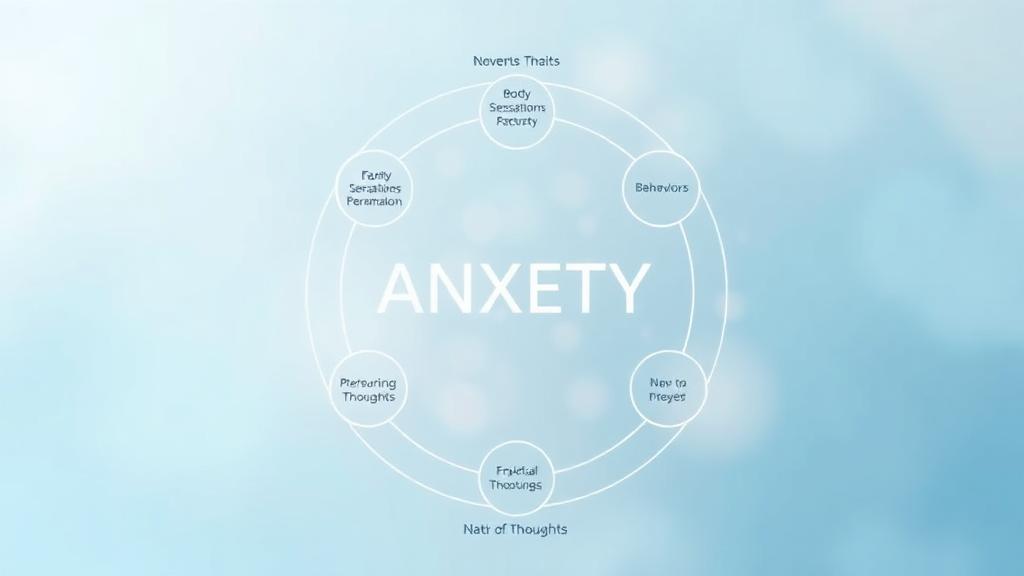
Anxiety is a system—a loop between your thoughts, your body, and your behaviors.
And when that system locks into place, willpower isn't enough.
The Anxiety Loop (and Why You Get Stuck in It)
Most people recognize the worry part of anxiety. But anxiety usually shows up in three interconnected domains:
- Thoughts – catastrophic predictions, "what if" spirals, fear of losing control
- Body – racing heart, shortness of breath, shakiness, tight chest
- Behaviors – avoidance, over-preparing, reassurance seeking, canceling plans
These responses reinforce each other.
You feel anxious → you avoid → the avoidance reduces anxiety for a moment → your brain learns avoidance is the solution → anxiety grows.
This is why anxiety often expands over time—not because you're failing, but because your brain is learning in the background.
How Evidence-Based Therapy Breaks the Loop
Approaches like Cognitive Behavioral Therapy (CBT), Acceptance and Commitment Therapy (ACT), and Dialectical Behavior Therapy (DBT) are not abstract concepts—they are structured, research-backed ways to disrupt the anxiety system.
Here's how they work:
- Cognitive Behavioral Therapy (CBT) helps you identify, challenge, and change the distorted thinking patterns that amplify fear.
- Acceptance and Commitment Therapy (ACT) teaches you how to respond to anxiety with flexibility instead of resistance, allowing you to take meaningful action even when discomfort is present.
- Dialectical Behavior Therapy (DBT) provides emotional regulation, distress tolerance, and grounding tools that stabilize the nervous system.
- Exposure-based interventions retrain the brain to stop interpreting normal sensations as threats so your world becomes bigger, not smaller.
When these approaches are matched to your personality, values, and goals, the anxiety system finally begins to unwind—and real change becomes possible.
Your Nervous System Can Learn New Patterns
You don't have to eliminate anxiety to live confidently.
You need new ways of responding to it.
Evidence-based therapy provides a roadmap toward:
- less avoidance
- less reactivity
- more resilience
- more clarity
- more control over your internal experience
Most importantly:
you gain the freedom to live the life you want—not the life anxiety dictates.
About the Author
Dr. Alex Crenshaw is a licensed clinical psychologist specializing in evidence-based treatments for anxiety, PTSD, and relationship issues. His approach integrates clinical research with compassionate, personalized care.
Schedule a consultation →